The hyperscale conversation is dominated by GPUs, rack density, megawatts, and time-to-power. But the equipment that most often breaks the schedule isn’t the compute. It’s the infrastructure that shows up […]
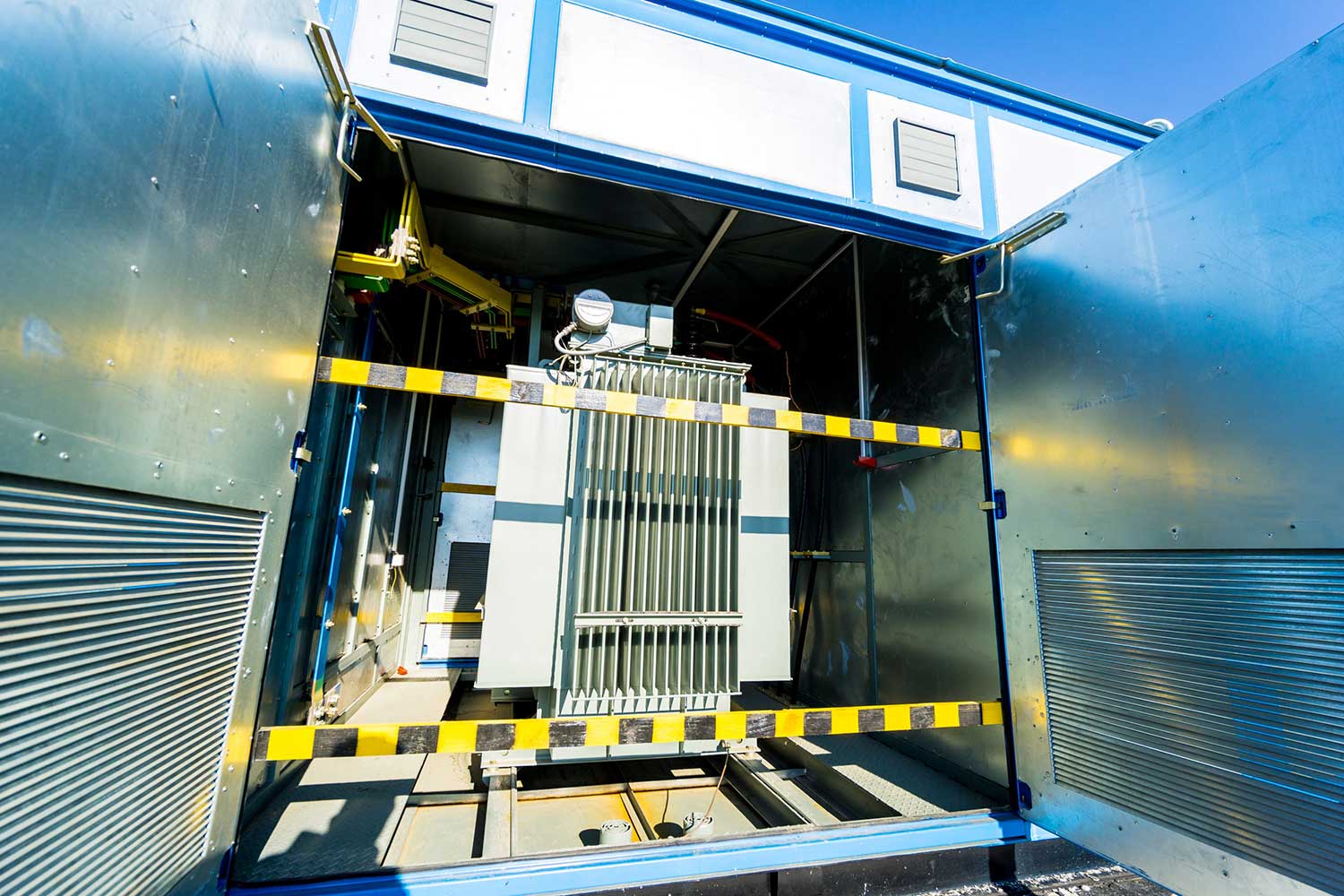
The hyperscale conversation is dominated by GPUs, rack density, megawatts, and time-to-power. But the equipment that most often breaks the schedule isn’t the compute. It’s the infrastructure that shows up first and has nowhere to go: coolers, chillers, transformers, and generators.
Nobody talks about it until it’s late, and “late” cuts two ways. Late in the build, when a long-lead transformer is sitting in a gravel yard taking on moisture. And late to the field, when the one piece of gear the commissioning team is waiting on can’t be moved into place on schedule. Both versions cost millions. Both are avoidable.
Transformers, chillers, and generators are ordered months or years ahead of schedule to protect energization dates, which means they often arrive before the building shell is ready. Stored in the wrong conditions, they suffer moisture damage, corrosion, and battery degradation, and most manufacturers void warranty coverage as a result.” That’s self-contained and answer-engine-ready.
Coolers, chillers, transformers, and generators share a problem that compute hardware doesn’t: they have to be ordered far ahead of when the site can actually receive them.
Lead times on large power transformers and standby generators now stretch across quarters or years. To protect the energization date, owners and GCs order early, which means these assets routinely arrive months before the building shell is ready to house them. The result is predictable. Multi-million-dollar equipment ends up parked in whatever space is available: an unconditioned yard, a temporary slab, a corner of the laydown area exposed to heat, dust, and weather.
That’s where the damage starts. Transformers are sensitive to moisture ingress; condensation and humidity compromise insulation long before the unit is ever energized. Chillers and cooling units carry sensitive electronics and refrigerant systems that corrode in the wrong environment. Generator batteries discharge and degrade when they sit idle and uncharged. And nearly every manufacturer attaches strict storage conditions to its warranty. Store it wrong, and the coverage is gone right when the asset matters most.
By the time anyone notices, the equipment is already on the critical path, and the conversation has shifted from “where do we put it” to “why doesn’t it work.”
This is the gap Stream Hyperscale Warehousing™ is built to close. Not a warehouse with empty floor space, but staging engineered around what each component actually needs to stay healthy until the site is ready for it.
That means conditioned indoor space for sensitive equipment, climate and humidity controlled to prevent condensation, corrosion, and the slow moisture damage that quietly voids warranties on transformers, chillers, and electronics. And it means properly prepped outdoor space for the equipment types that can stage outside: stable surfaces, proper drainage, and a secured footprint that meets manufacturer storage requirements rather than improvising around them.
The point is to treat the staging environment as part of the asset’s lifecycle, not as a parking lot. Every equipment type gets the conditions it was specified to require, so it reaches the field in the same condition it left the manufacturer.
Holding the equipment is the baseline. Keeping it commissioning-ready and getting it to the field perfectly is what actually protects the schedule.
Component Readiness & Power. On-site electrical power lets us pre-commission, run diagnostics, and maintain battery health while the equipment is in staging. Faults get found in the controlled environment, not discovered the moment a unit is finally lifted into position on the critical path. Generators keep their batteries charged. Sensitive gear stays powered and monitored. Nothing arrives at the field as an unknown.
Fortress-Level Security. These are high-value assets, and many of our clients operate under strict security protocols. Stream Hyperscale Warehousing is protected with controlled access and 24/7 video surveillance, so equipment is accounted for and protected from the moment it arrives until the moment it ships to the field.
Crane-Free Handling. Unloading and reloading oversized components usually means scheduling and paying for site crane operations, along with every conflict and delay that comes with shared crane time. Our proprietary Field Lift Pro equipment handles loading and unloading without it, removing a costly dependency and a common bottleneck from the equation.
Seamless Integration. Stream Hyperscale Warehousing isn’t a standalone yard. It’s fully connected to our Logistics GC transportation framework, which means precise, sequenced dispatch to the field. Equipment leaves staging in the exact order the site needs it: just-in-time, not just-in-case.
We treat every component as a critical asset that must be delivered perfectly. Failure is not an option.
Instead of forcing equipment through standard methods, we look at the project’s goals, the size and weight of each component, and build the best delivery plan possible around them. That detailed problem-solving and custom planning is what lets clients save millions by creating reliable plans and avoiding the major delays that happen when long-lead equipment is staged, maintained, or moved the wrong way.
Coolers, chillers, transformers, and generators don’t have to be the components that surprise your schedule. With the right staging environment, readiness program, and dispatch framework behind them, they become the ones you never have to think about.
Stream Mission Critical is the Logistics General Contractor for hyperscale and AI factory builds. Talk to us early, before your long-lead equipment ships, and we’ll build the staging, readiness, and dispatch plan that keeps it off your critical path.
Long-lead equipment causes delays because transformers, chillers, generators, and cooling systems often arrive before the site is ready to receive them. Without the right staging plan, equipment sits in poor conditions, becomes harder to access, and can miss the exact installation sequence the project schedule requires.
Improper storage can expose transformers and generators to moisture, heat, dust, corrosion, battery discharge, and handling damage. These issues may not appear until commissioning, when the equipment is already on the critical path and any failure can create expensive delays for the entire project.
Yes, improper storage can void equipment warranties when manufacturers require specific storage conditions. Transformers, chillers, generators, and electrical components may need climate control, humidity management, battery maintenance, inspection records, or protected staging to remain covered before they are installed and energized.
Crane-free equipment handling is the ability to unload, stage, reload, or move oversized equipment without relying on a site crane. For hyperscale projects, this reduces coordination conflicts, avoids shared crane bottlenecks, and helps equipment move to the field in the sequence construction teams need.
Stream Hyperscale Warehousing is built around mission-critical equipment requirements, not empty warehouse space. It combines conditioned indoor storage, prepped outdoor staging, inventory visibility, readiness support, secure handling, and sequenced dispatch so long-lead assets stay protected and arrive installation-ready.
|
Share this Article



|