Every hyperscaler has a logistics brief. Almost none of them are actually briefing logistics. Pull the document. It lists volumes, equipment types, delivery windows, and a rate card. It reads […]
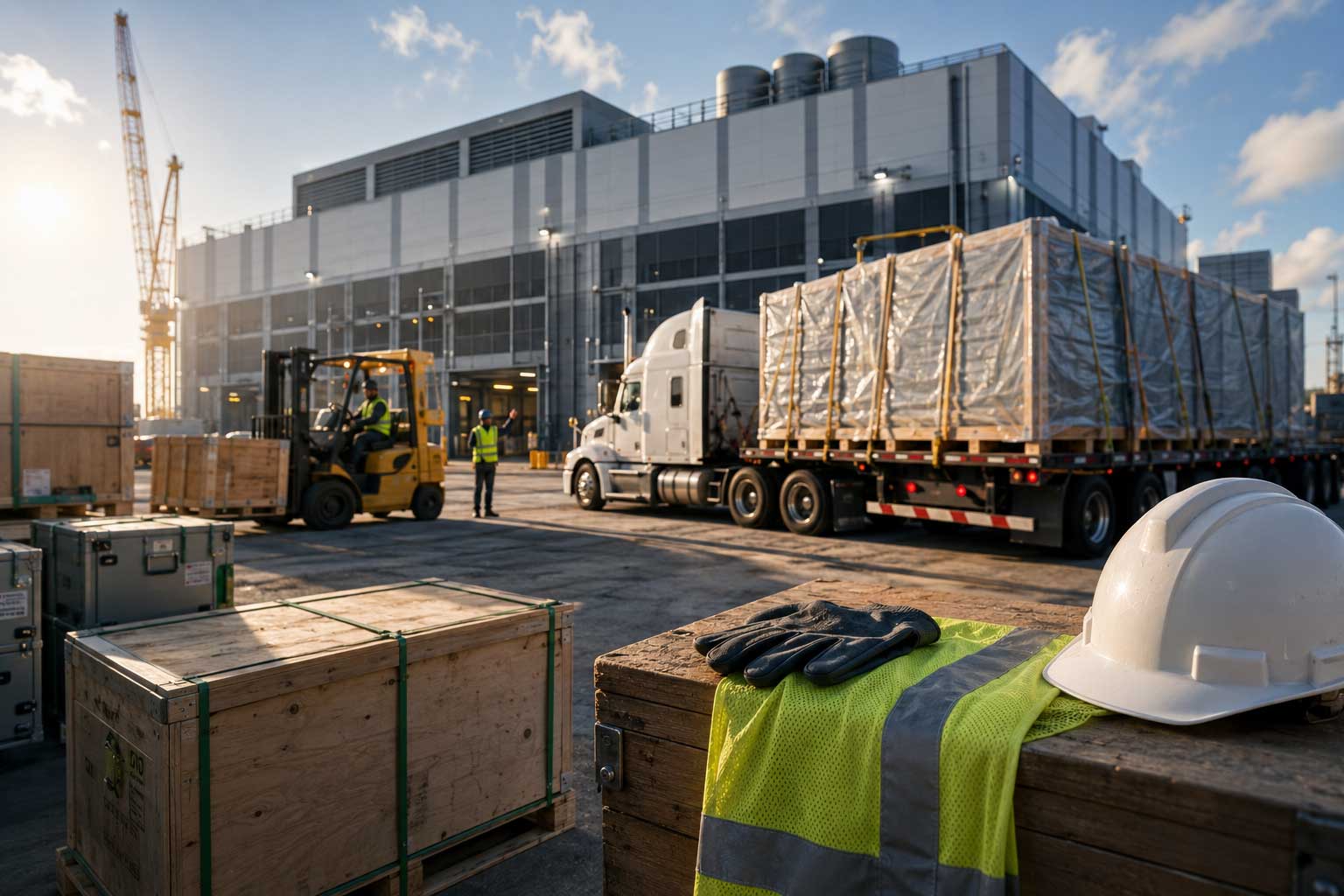
Every hyperscaler has a logistics brief. Almost none of them are actually briefing logistics.
Pull the document. It lists volumes, equipment types, delivery windows, and a rate card. It reads like a freight tender because that is exactly what it is. Somewhere along the way, “logistics” got filed under procurement, next to office supplies and janitorial contracts, instead of where it actually belongs: inside the execution plan, sitting next to construction sequencing and commissioning readiness.
That single misclassification is the root of almost every logistics failure on a hyperscale build. Not weather. Not carrier capacity. Not the supply chain. The brief itself.
The typical hyperscaler logistics brief asks: how fast can you move freight, and what will it cost.
The question that actually protects the schedule is different: can you deliver the right equipment, to the right location on site, in the exact sequence the installation plan requires, without creating a laydown problem or a crane conflict three weeks from now.
Those are not the same question, and they do not produce the same answer. A carrier can win on the first question and still be the reason a startup date slips. Freight arriving on time and freight arriving in usable sequence are two different outcomes, and only one of them keeps a data center on schedule.
Logistics gets scoped like a transaction, not a schedule partner. Most briefs are written and issued before the installation sequence is finalized, sometimes before it exists in any usable form. Logistics is asked to quote against a bill of materials and a rough timeline, then expected to absorb whatever sequencing changes happen afterward. By the time logistics is looped into the real schedule, the commitments are already made and the flexibility is gone.
Volume gets briefed. Sequence does not. A brief that says “40 skids of switchgear, 12 CRAH units, deliver over Q3” tells a logistics partner almost nothing useful. It says nothing about which unit needs to hit the floor first for the electrical crew to start terminations, which laydown bay has capacity on a given week, or which piece of gear has to be staged for a crane-free set because there is no crane path to that section of the white space. Without installation-sequenced delivery built into the brief from day one, logistics is left guessing at a puzzle only the construction team can see.
Accountability is scattered across too many vendors. A typical hyperscale build has separate contracts for freight, storage, site handling, and asset tracking, each managed by a different point of contact, each reporting a different version of status. When something goes wrong, and something always goes wrong on a build this complex, the first hour is spent figuring out who is actually responsible before anyone can fix it. A single point of accountability across the full chain, from yard to final set, is what turns a scramble into a phone call.
Chain of custody is treated as paperwork instead of risk management. Switchgear, UPS modules, batteries, and generators represent enormous capital value sitting in transit and in laydown yards for weeks at a time. Most briefs ask for a delivery confirmation. Almost none ask for a digital, real-time chain of custody that tracks condition, location, and handling history for every high-value asset. The gap only becomes visible the day something arrives damaged, missing, or unaccounted for, and by then it is a claims problem instead of a prevention problem.
Schedule changes do not reach logistics fast enough. Construction schedules move constantly on a hyperscale build. A two-week slip on structural steel cascades into everything behind it. When logistics is treated as an external vendor rather than an integrated execution partner, that information travels slowly, if it travels at all. Trucks get dispatched against a schedule that is already stale. Laydown space gets consumed by material that cannot yet be installed. The fix is not better trucking. It is giving logistics a live seat in the schedule conversation, not a static brief updated once a quarter.
A logistics brief that protects the schedule looks less like a freight tender and more like an execution document. It includes the installation sequence, not just the bill of materials. It names a single point of accountability across storage, transport, and site handling. It requires real-time chain of custody tracking for high-value assets, not delivery receipts. And it treats the logistics partner as a participant in schedule changes, not a downstream recipient of them.
None of this is complicated. It is a shift in how the function gets framed before the first RFP ever goes out. Hyperscalers that make this shift stop discovering logistics problems on the construction floor and start catching them in the planning room, where they are cheap to fix instead of expensive to unwind.
Logistics was never the freight. It was always the sequence. Brief it like freight, and you get freight problems. Brief it like sequence, and you protect the schedule it was always meant to serve.
|
Share this Article



|